
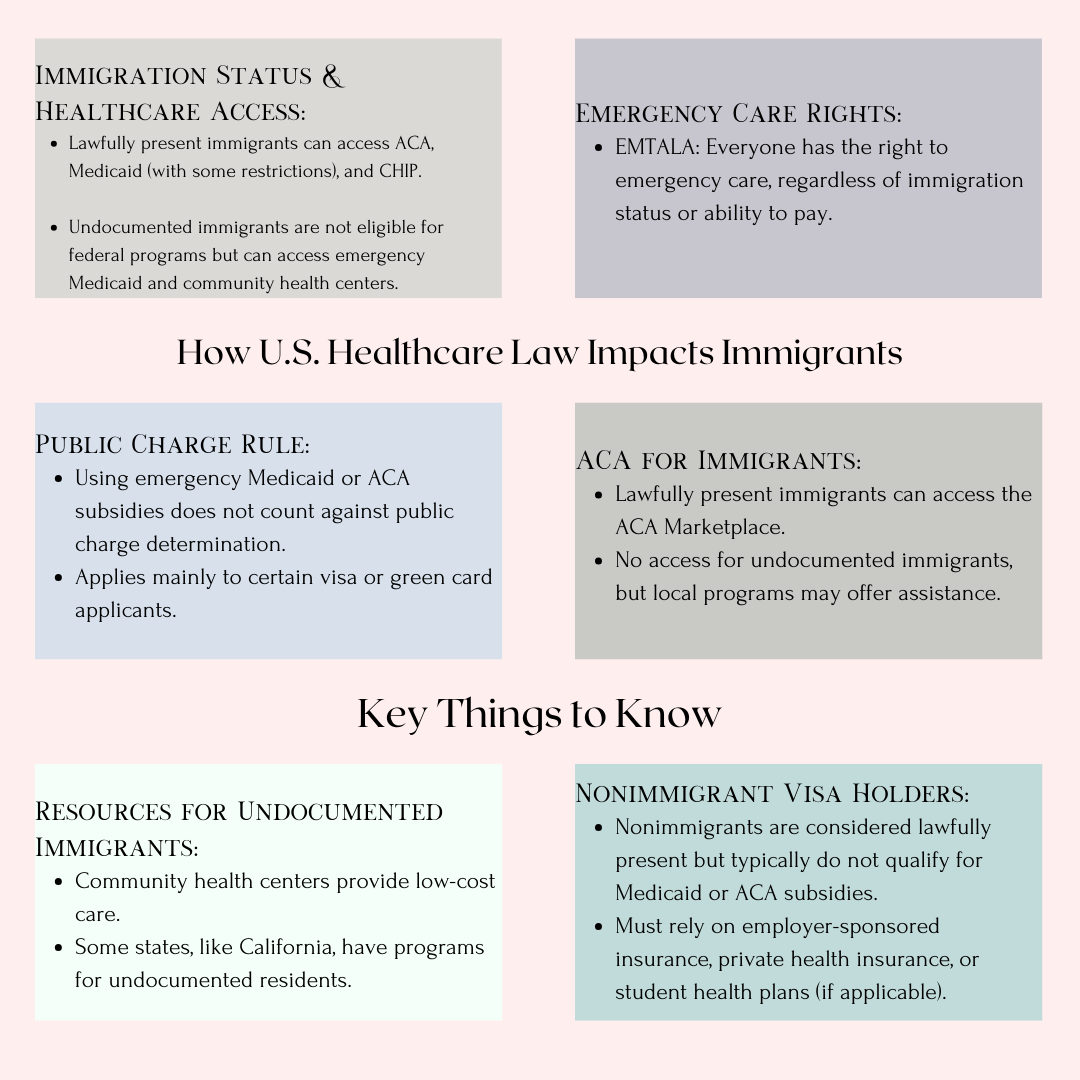
The U.S. healthcare system can be complex, especially for immigrants. Access to healthcare often depends on immigration status, creating confusion and uncertainty for many. In this post, we’ll explore how immigration status impacts access to health coverage, detailing the different categories of immigrants and their options.
Lawfully Present Immigrants
Lawfully present immigrants, such as green card holders, refugees, asylees, and those on work or student visas, generally have access to coverage through the Affordable Care Act (ACA) Marketplace. Depending on their income, they may be eligible for subsidies to help with costs. However, Medicaid and the Children’s Health Insurance Program (CHIP) eligibility varies by state, with some immigrants facing a five-year waiting period before qualifying.
Undocumented Immigrants
Undocumented immigrants are not eligible for most federal health programs like Medicaid, Medicare, or ACA coverage. However, they can access emergency Medicaid in life-threatening situations and may receive limited care through community health centers and local programs that cater to vulnerable populations.
DACA Recipients
DACA recipients hold a unique status. While they are lawfully present in the U.S., they do not qualify for Medicaid, CHIP, or ACA Marketplace insurance. Instead, DACA recipients often rely on employer-sponsored plans or private healthcare coverage.
Nonimmigrant Visa Holders
Temporary visa holders, such as students and workers, are lawfully present but typically do not qualify for Medicaid or ACA subsidies. They need to rely on private insurance, employer-sponsored plans, or student health insurance if they are enrolled in educational institutions.
Understanding how healthcare access differs based on immigration status is crucial for immigrants and those supporting them. Make sure to explore options and seek guidance on what’s available based on your specific situation.
Leave a Reply